Current Federal Projects
Spaulding for Children leads and participates in several federally-funded initiatives designed to advance permanency practice, build agency capacity, and support children and families nationwide.

Active | 5 Year Program
About National Center for Enhanced Post-Adoption Support
The National Center for Enhanced Post-Adoption Support (NPAC) is a five-year, cooperative agreement funded by the Children’s Bureau, an office of the Administration for Children & Families within the United States Department of Health and Human Services. Starting in October 2023, the Post-Adoption Center became a hub for universal and on-site technical assistance and other resources to support states, tribal nations and territories (sites) as they develop, implement aand sustain comprehensive, community centered and accessible post-permanency services. The Post-Adoption Center provides access to various resources that will enable sites to provide practical services to families that have achieved permanency through adoption or guardianship. Services provided by the Post-Adoption Center are free of charge, collaborative and driven by community engagement.


Active | Federal Program
About The National Training and Development Curriculum
The National Training and Development Curriculum (NTDC) is based on research and input from experts, families who have experience with fostering or adopting children, and former foster and adoptive youth. The curriculum design is intended to support three populations, including:
families who foster, provide kinship care and/or adopt children from the child welfare system,
families who adopt via the intercountry or private domestic process, and
American Indian Alaska Native families who foster, provide kinship care and/or adopt children from the tribal child welfare system.

Active | 5 Year Project
About QIC-EY
Launched in October 2021, the Quality Improvement Center on Engaging Youth in Finding Permanency (QIC-EY) is a five-year project designed to advance child welfare programs and practices that promote the authentic engagement and empowerment of children and youth in foster care throughout the United States, particularly in relation to permanency planning. Extended for a sixth year, the QIC-EY aims to bring about systemic changes in how children and youth are authentically engaged, reflected through intentional shifts in child welfare policy, practice, and culture. To achieve these goals, the QIC-EY works with sites (state child welfare agencies and tribal nations) to implement engagement focused workforce training and coaching, youth centered program models, engagement focused court training, and other capacity building activities designed to elevate youth voice and advance partnerships with people with lived experience. Established through a cooperative agreement with the Children’s Bureau of the Administration for Children & Families (ACF) within the U.S. Department of Health and Human Services (HHS), the QIC-EY is funded entirely by the ACF/HHS.

Active | 5 Year Program
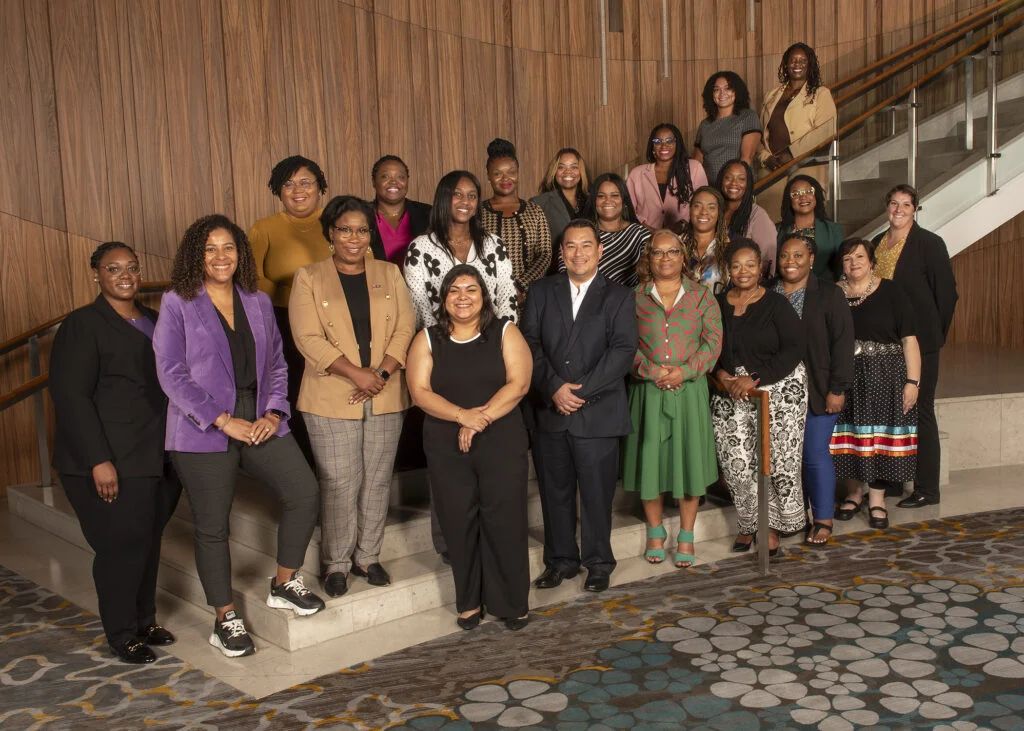
About AdoptUSKids Professional Leadership Development
AdoptUSKids Professional Leadership Development (APLD) is a 12-month program designed for emerging leaders working in child welfare. The structured program includes hands-on experience, exposure to national experts, and mentorship opportunities. Made possible through grant funding from AdoptUSKids, APLD was launched in 2018 and has graduated eight cohorts of leaders. Cohort Nine will begin their fellowship in October 2026.

Active | Program Curriculum
About ASCC
The Adoption-Sensitive Clinical Care project, or ASCC, was developed to help hospital-based staff (HBS) feel more comfortable and confident discussing adoption as an option with patients facing unintended pregnancies.

Active | Federal Program
About KINDER-CARES
Spaulding for Children, in partnership with the Michigan Department of Health and Human Services (MDHHS), Macomb County (MCDHHS) and Wayne State University (WSU) was awarded a federal grant to develop a framework to provide training and support to kinship families, foster parents, parents and their children/youth who are working toward a goal of reunification. The project is called KINDER-CARES which stands for Kinship Network Development, Empowerment and Resilience and Connection and Relationship Enhancement through Shared Parenting. KINDER-CARES is a six-component program that is based on and in alignment with “Becoming a Family-Focused System”. KINDER-CARES will review/refine existing organizational policies and philosophy, conduct assessments to help guide transformational change, develop and promote training that supports staff, kinship caregivers and shared parenting, provide new/enhanced supports to kinship caregivers from the initial contact to reunification or other forms of permanency, broaden the role of kinship caregivers to be prepared/strengthened to provide the essential ongoing supports to relatives and their children after reunification and develop and coordinate local community supports to enhance and sustain the well-being of kinship caregivers.


Active | Federal Program
About Kinship Care Resource Center
The Kinship Care Resource Center is one of several community programs in the School of Social Work at Michigan State University. The KCRC serves kinship care families across the state by providing information and referrals to resources and services for caregivers and the children they are raising. KCRC also offers support to professionals serving kinship families.
We serve kinship caregivers who are related or have a family-like bond with a child they are providing with full-time care without the parents assistance.
Past Federal Projects
These federally funded projects have concluded but represent a core part of Spaulding’s legacy in advancing child welfare practice, training, and permanency nationwide.